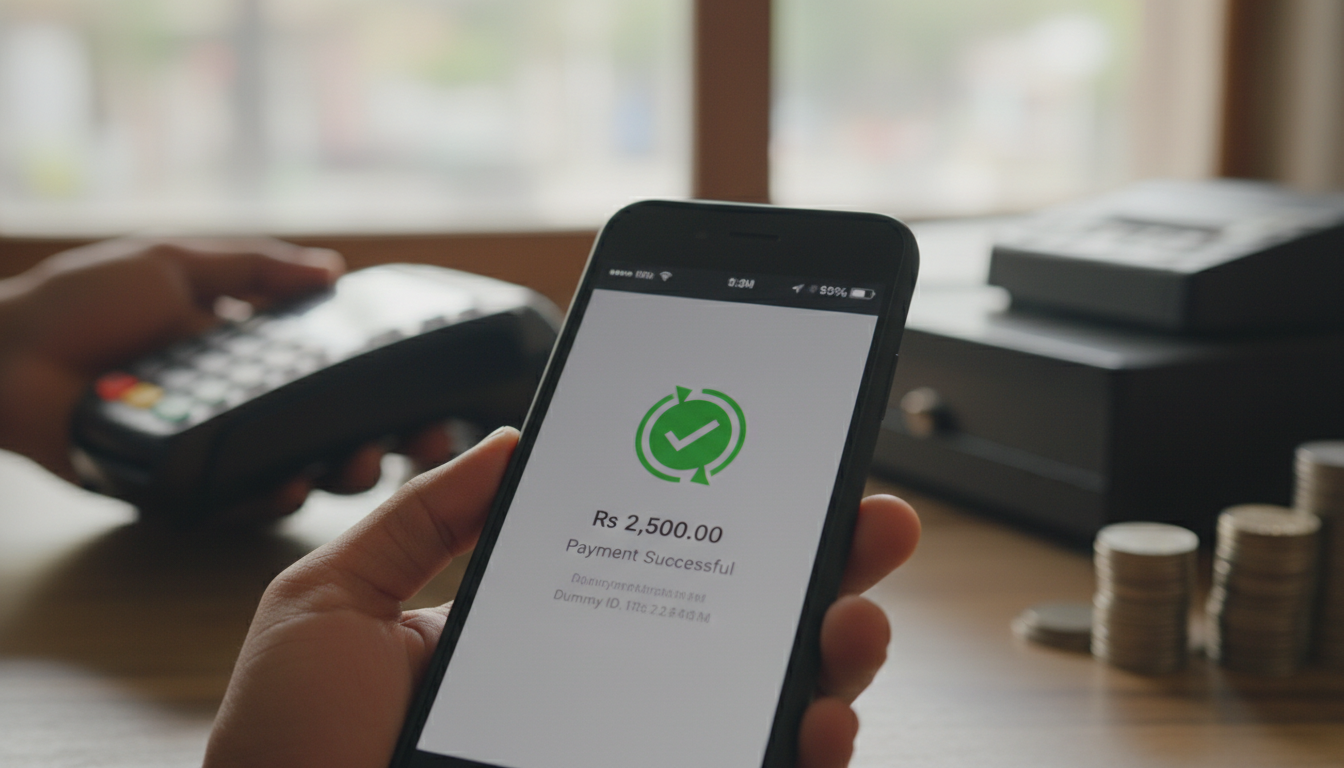
NEW DELHI – India's Supreme Court on Monday asked the central government to explain its decision to levy charges on Unified Payments Interface (UPI) transactions exceeding ₹2,000. The court, however, refused to issue an interim stay on the new framework, which is scheduled to take effect from October 15, 2026, according to reports from Live Law and business-standard.com.
The apex court's directive came as it issued notices to the Reserve Bank of India (RBI) and the National Payments Corporation of India (NPCI) regarding the implementation of the Merchant Discount Rate (MDR) on these digital transactions. During the proceedings, the Supreme Court reportedly questioned the nature of these charges, asking, "If neither tax nor fee, what is this ‘expropriation’?" as reported by Live Law.
Details of the New UPI Charges
The framework for these new charges specifies a 0.4 per cent MDR on certain person-to-merchant (P2M) UPI transactions that exceed a value of ₹2,000, business-standard.com reported. This means that for transactions where an individual pays a merchant using UPI, and the amount is greater than ₹2,000, a 0.4% charge will be applied. The exact mechanism of who bears this charge (merchant or consumer) and how it will be implemented remains a key area of public and judicial scrutiny.
The effective date for these charges, October 15, 2026, is now less than three weeks away. Despite the legal challenge and the Supreme Court's request for an explanation, the absence of an interim stay means the new levy is set to proceed as planned, unless further judicial intervention occurs or the government alters its stance.
Context of India's Digital Payment Landscape
The Unified Payments Interface (UPI) has been a cornerstone of India's digital payments revolution, facilitating millions of transactions daily since its launch. Historically, UPI transactions have largely been free for users, contributing significantly to its widespread adoption across various sectors, from street vendors to large retail chains. This new framework marks a significant shift in that policy, introducing a cost for specific types of transactions.
The introduction of MDR on UPI transactions above ₹2,000 has sparked debate among financial experts, consumer groups, and businesses. While proponents argue that such charges are necessary to sustain and further develop the UPI infrastructure, critics express concerns about the potential impact on digital adoption, especially for small merchants and consumers who have become accustomed to free transactions.
The Supreme Court's decision to seek an explanation underscores the legal and economic complexities surrounding the new charges. By questioning whether the levy constitutes an "expropriation" if it is neither a tax nor a fee, the court has highlighted the need for clarity on the legal basis and justification for these charges.
Implications and What's Next
The immediate implication of the Supreme Court's refusal to grant an interim stay is that the new MDR framework is poised to roll out on October 15, 2026, as scheduled. This means that users conducting person-to-merchant UPI transactions exceeding ₹2,000 will likely encounter the 0.4% charge from that date onwards, unless a subsequent court order or government decision intervenes before then.
For merchants, especially those dealing with higher-value transactions, this could translate into increased operational costs, which may or may not be passed on to consumers. The move could also influence consumer behavior, potentially encouraging the use of alternative payment methods for larger transactions or promoting cash usage in some instances, though the full impact remains to be seen.
The central government, the Reserve Bank of India, and the National Payments Corporation of India are now mandated to respond to the Supreme Court's notices. Their explanations will be crucial in determining the future course of the legal challenge. The court's inquiry into the nature of the charges – questioning if they are a tax, a fee, or an "expropriation" – suggests a deep dive into the regulatory and constitutional validity of the levy. Future hearings will likely delve into these justifications, potentially leading to further legal pronouncements on the matter.
Stakeholders across the digital payments ecosystem will be closely watching the government's response and the subsequent proceedings in the Supreme Court, as the outcome will have significant ramifications for the future of digital transactions in India.

